链表 c语言动态内存管理中
链表结构无处不在
有fast bin这种单向链表
也有unsorted bin这种双向链表
我应该还是蛮熟悉的…
重点在于对指针的理解
做题过程中呢发现
核心算法是
双指针
那么
启动!
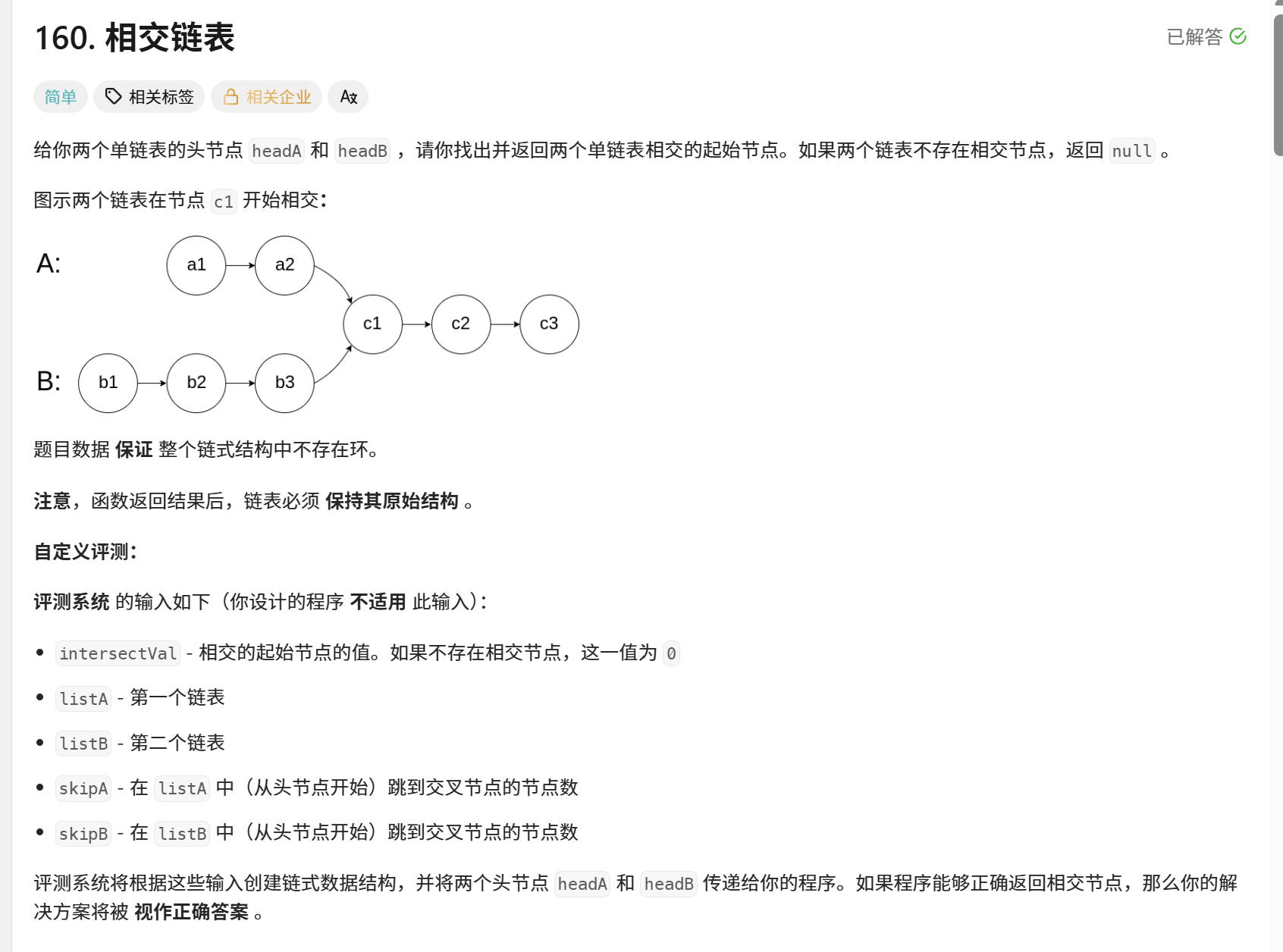
160.相交链表
双指针好吧
解:
1 2 3 4 5 6 7 8 9 10 11 12 13 14 15 16 17 18 19 20 21 class Solution {public :ListNode *getIntersectionNode (ListNode *headA, ListNode *headB) {if (!headA || !headB) return nullptr ;while (p1 != p2){return p1;
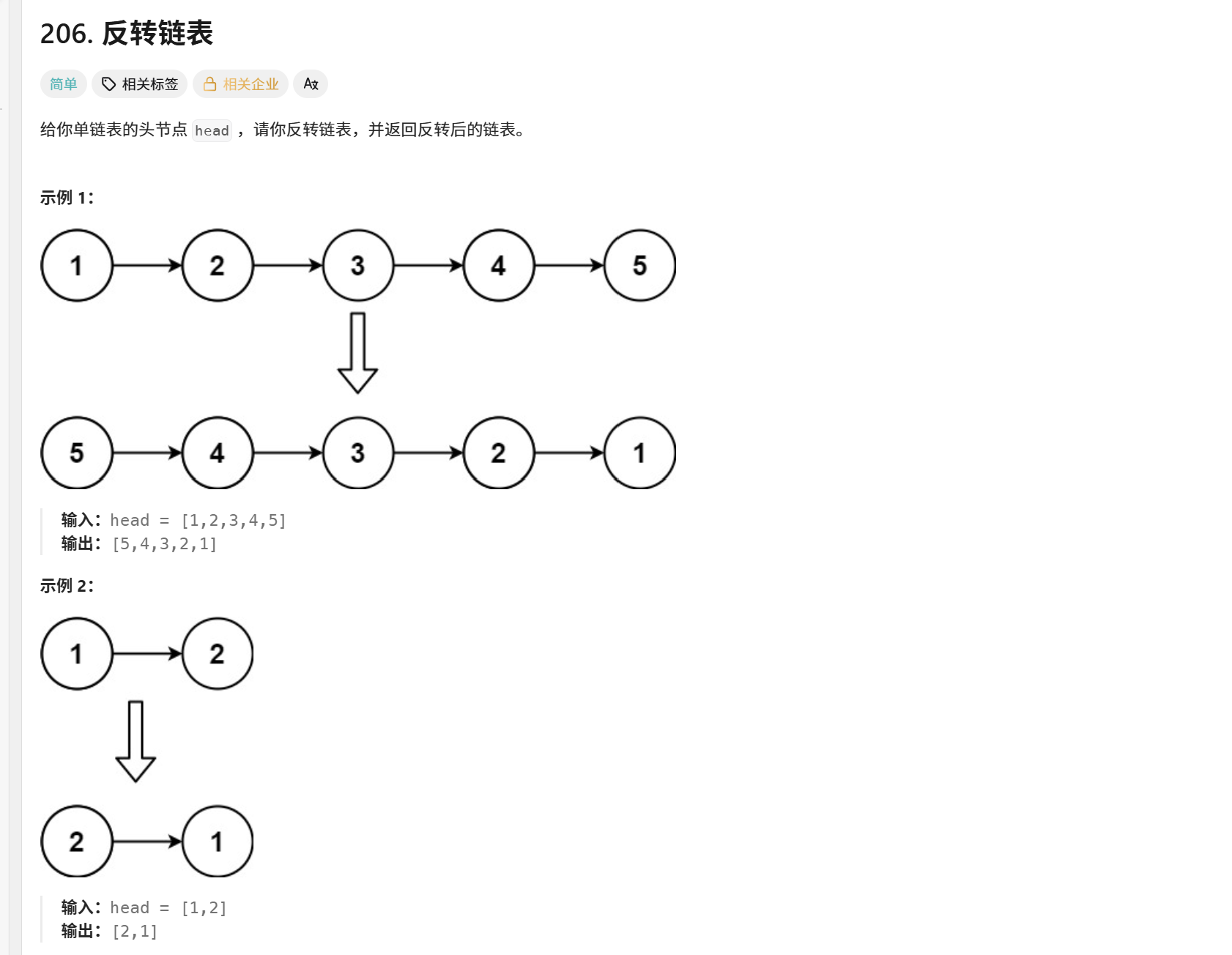
206.反转链表
解法:
reverse !
1
2
3
4
5
6
7
8
9
10
11
12
13
14
15
class Solution {public :ListNode* reverseList (ListNode* head) {nullptr ;while (cur){return prev;
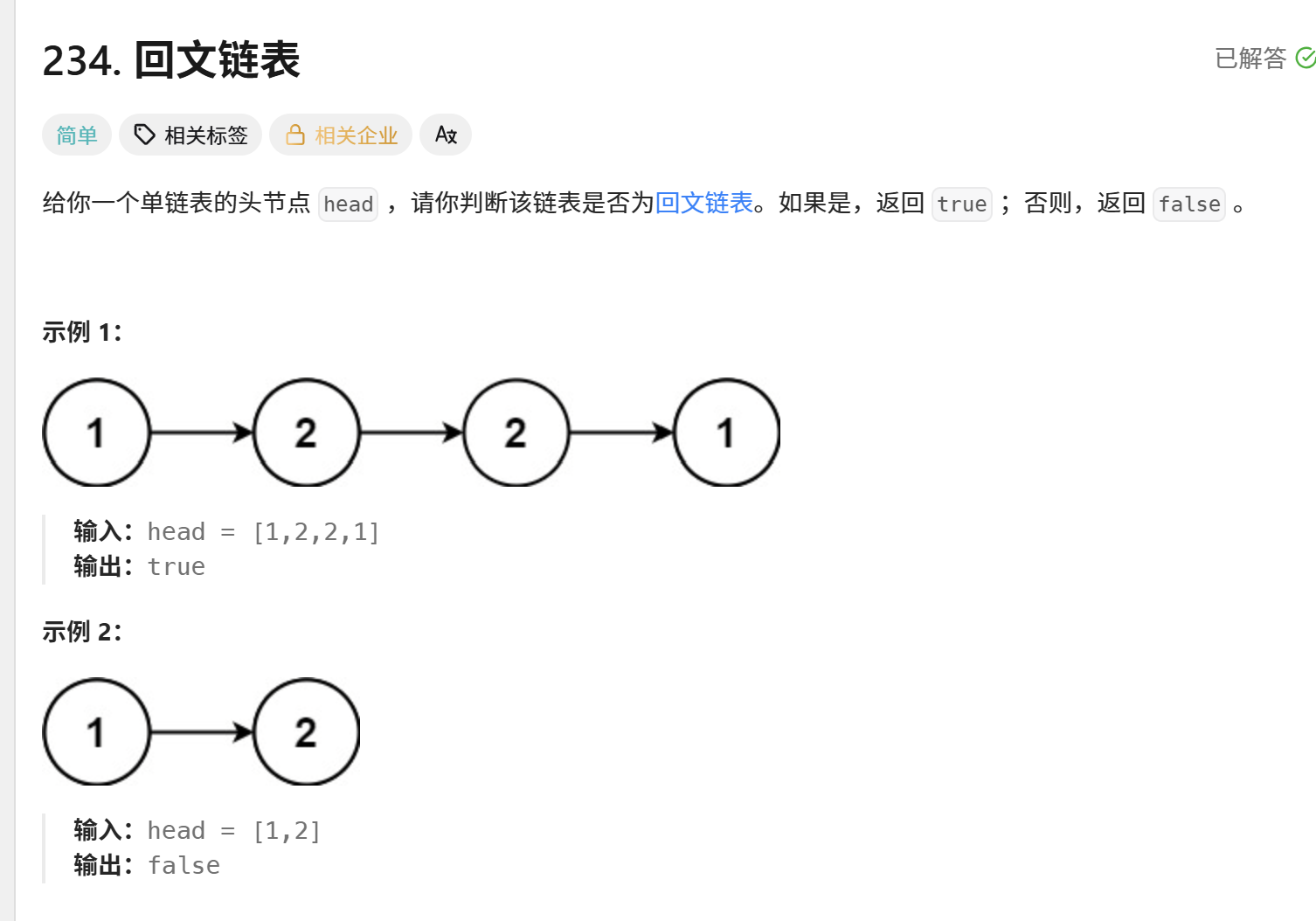
234.回文链表
解:
1
2
3
4
5
6
7
8
9
10
11
12
13
14
15
16
17
18
19
20
21
22
23
24
25
26
27
28
29
30
class Solution {public :bool isPalindrome (ListNode* head) if (!head || !head->next) return true ;while (fast && fast->next){nullptr ;while (slow){while (right){if (left->val != right->val){return false ;return true ;
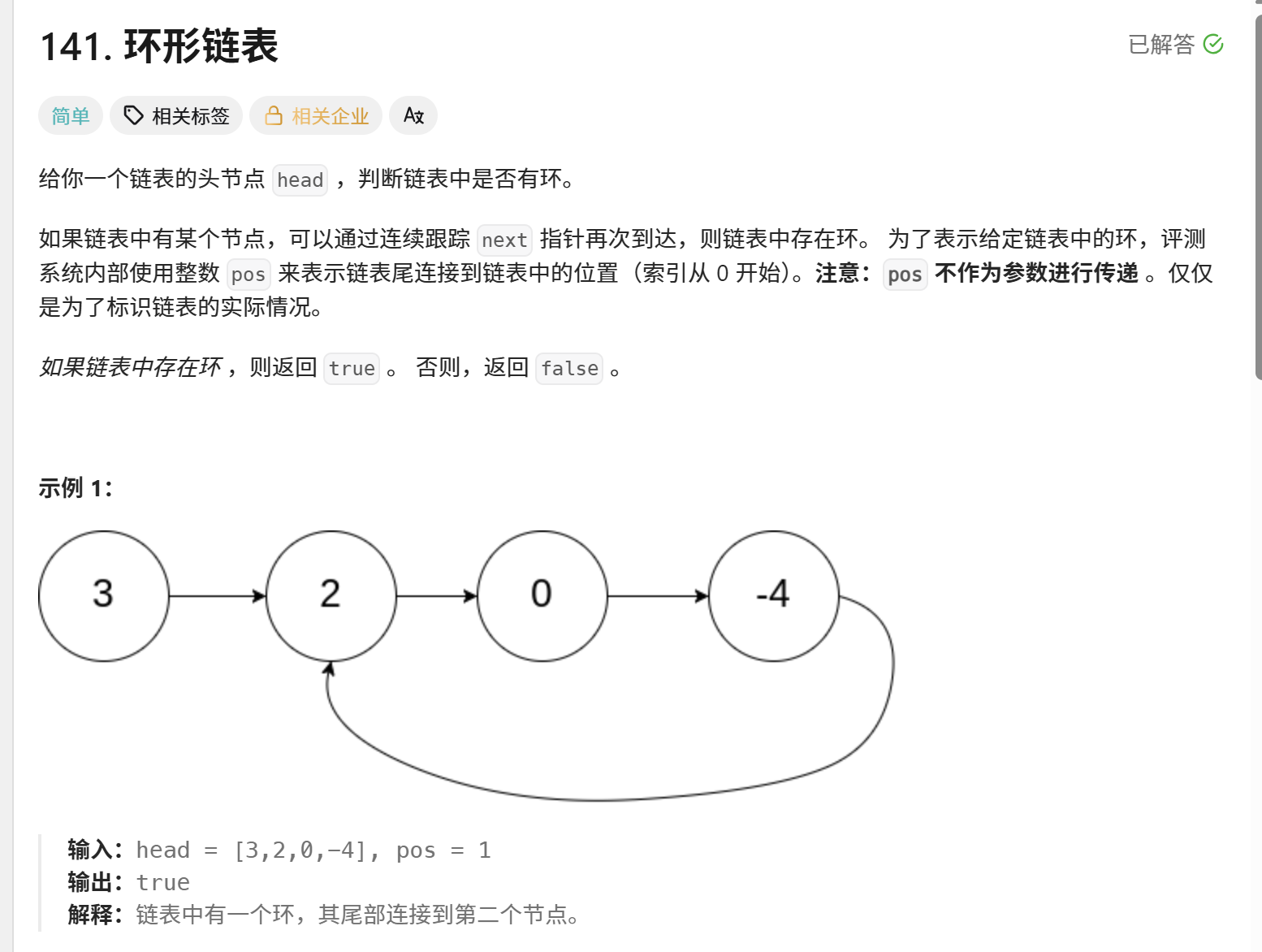
141.环形链表
解:
1
2
3
4
5
6
7
8
9
10
11
12
13
14
class Solution {public :bool hasCycle (ListNode *head) if (!head || !head->next) return false ;while (fast && fast->next){if (slow == fast) return true ;return false ;
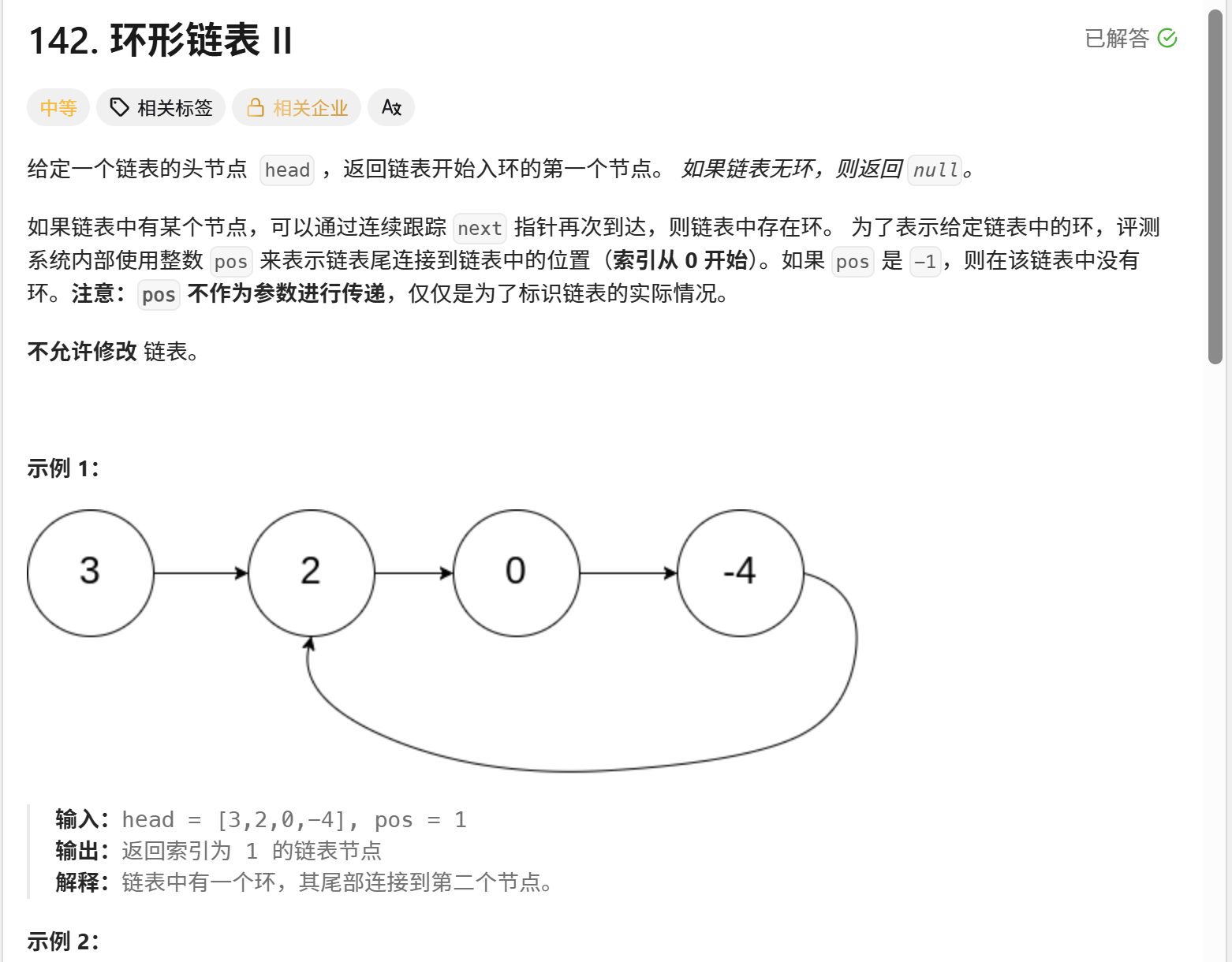
142.环形链表II
解:
1
2
3
4
5
6
7
8
9
10
11
12
13
14
15
16
17
18
19
20
class Solution {public :ListNode *detectCycle (ListNode *head) {if (!head || !head->next) return nullptr ;while (fast && fast->next){if (slow == fast) break ;if (!fast || !fast->next) return nullptr ;while (slow != fast){return slow;
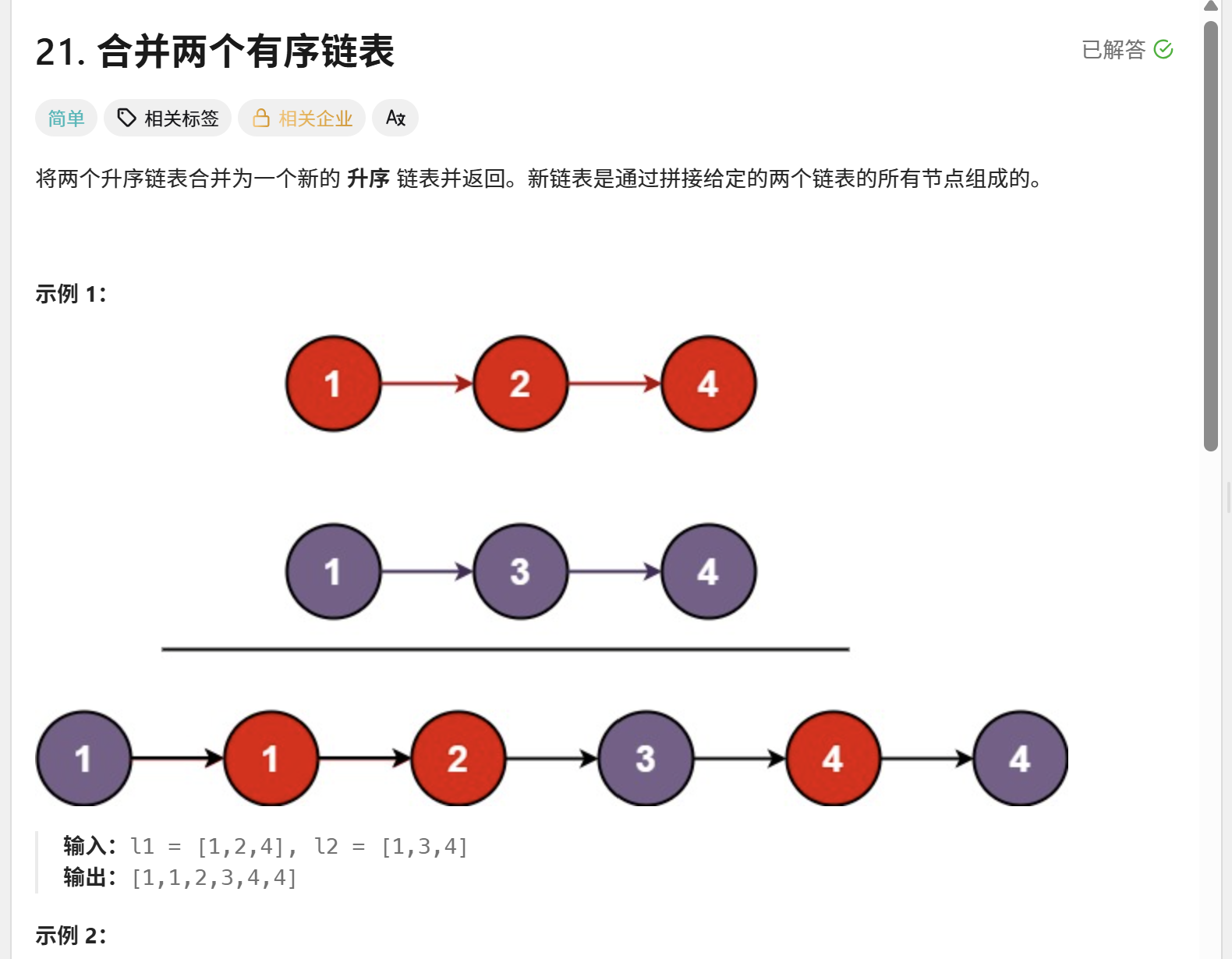
21.合并两个有序链表
解:
双指针
1
2
3
4
5
6
7
8
9
10
11
12
13
14
15
16
17
18
19
class Solution {public :ListNode* mergeTwoLists (ListNode* list1, ListNode* list2) {ListNode dummy (0 ) ;while (list1 && list2){if (list1->val <= list2->val){else {return dummy.next;
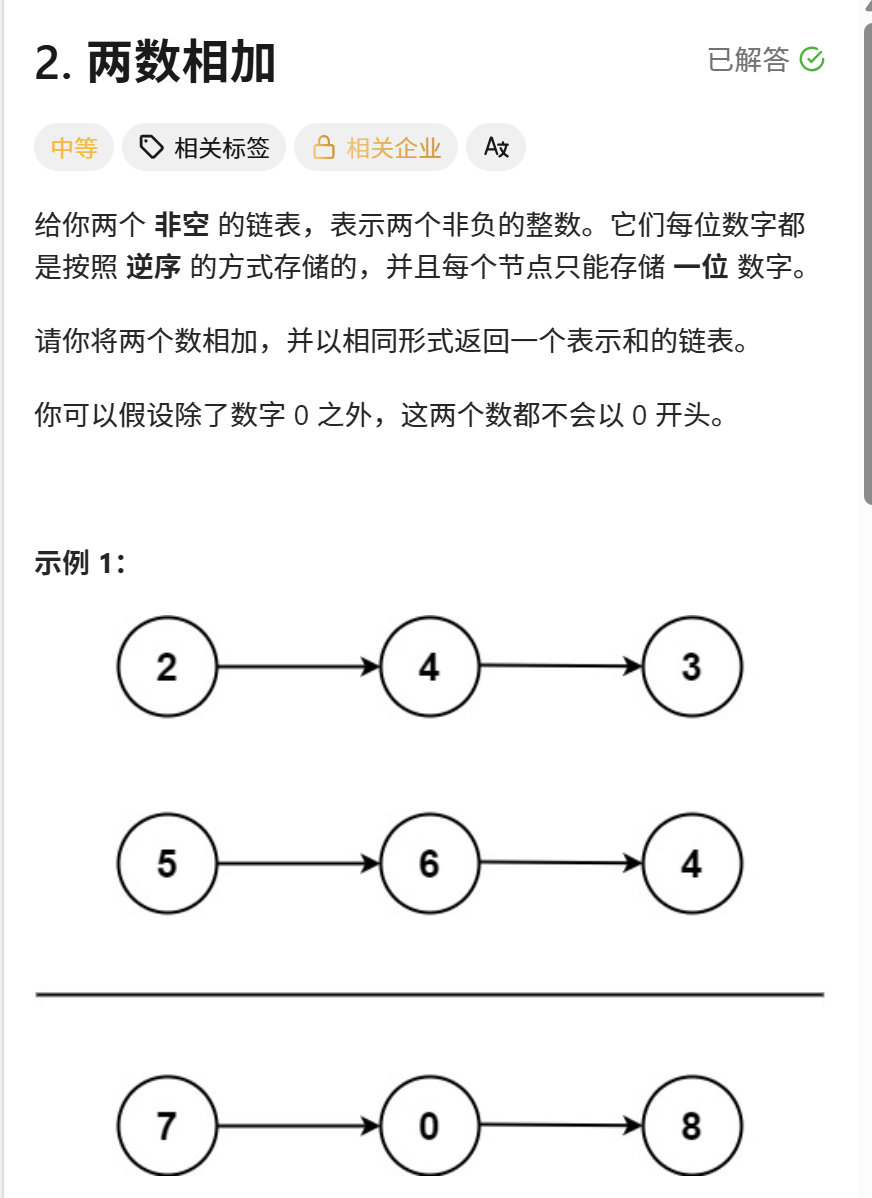
2.两数相加
用链表逐位相加并维护进位,用dummy head简化边界处理 ,线性时间 构造结果链表~
解:
1 2 3 4 5 6 7 8 9 10 11 12 13 14 15 16 17 18 19 20 21 22 23 24 25 26 27 28 29 30 31 32 33 class Solution {public :ListNode* addTwoNumbers (ListNode* l1, ListNode* l2) {ListNode dummy (0 ) ;int carry = 0 ;while (l1 || l2 || carry) {int sum = carry;if (l1) {if (l2) {10 ;new ListNode (sum % 10 );return dummy.next;
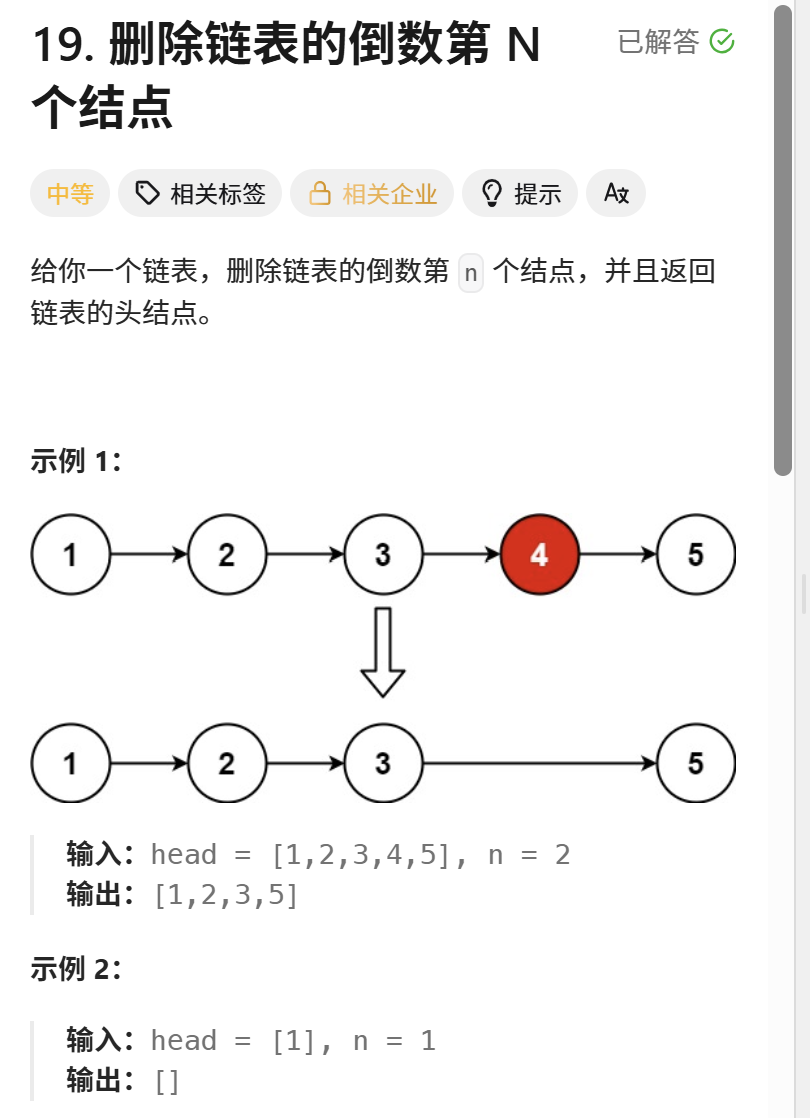
19.删除链表的倒数第N个节点 还是通过虚拟头结点配合快慢指针 保持固定间距,在一次线性遍历中定位并删除倒数第 n 个节点,统一处理头结点等边界情况~
解:
1 2 3 4 5 6 7 8 9 10 11 12 13 14 15 16 17 18 19 20 21 22 23 24 25 26 27 28 29 30 31 class Solution {public :ListNode* removeNthFromEnd (ListNode* head, int n) {ListNode dummy (0 ) ;for (int i = 0 ; i <= n; i++) {while (fast) {delete del;return dummy.next;
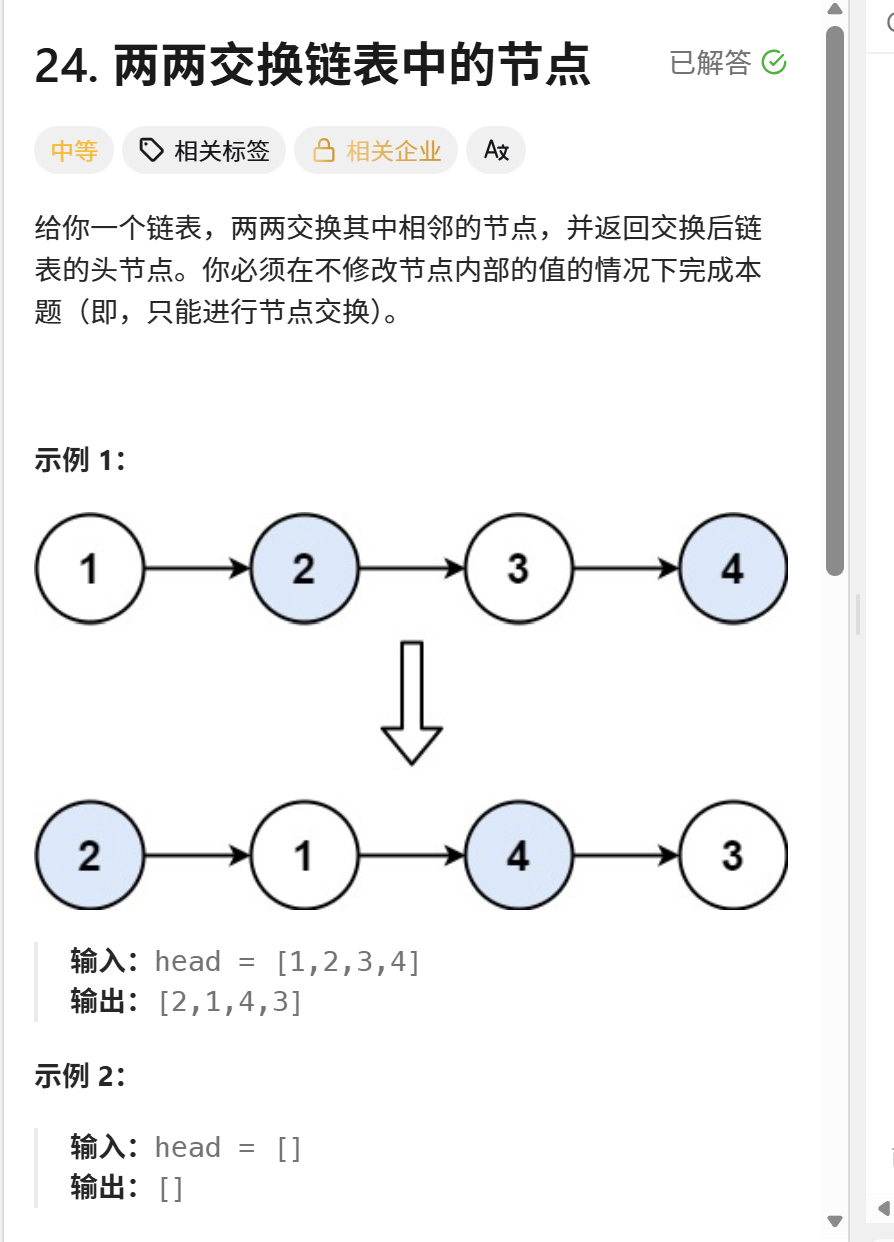
24.两两交换链表中的节点 依旧通过引入虚拟头结点并维护前驱指针,每次对相邻两个节点进行指针重连,在一次线性遍历中完成成对交换并统一处理头结点变化~
解:
1 2 3 4 5 6 7 8 9 10 11 12 13 14 15 16 17 18 19 20 21 22 23 24 25 26 27 28 29 30 class Solution {public :ListNode* swapPairs (ListNode* head) {ListNode dummy (0 ) ;while (prev->next && prev->next->next) {return dummy.next;
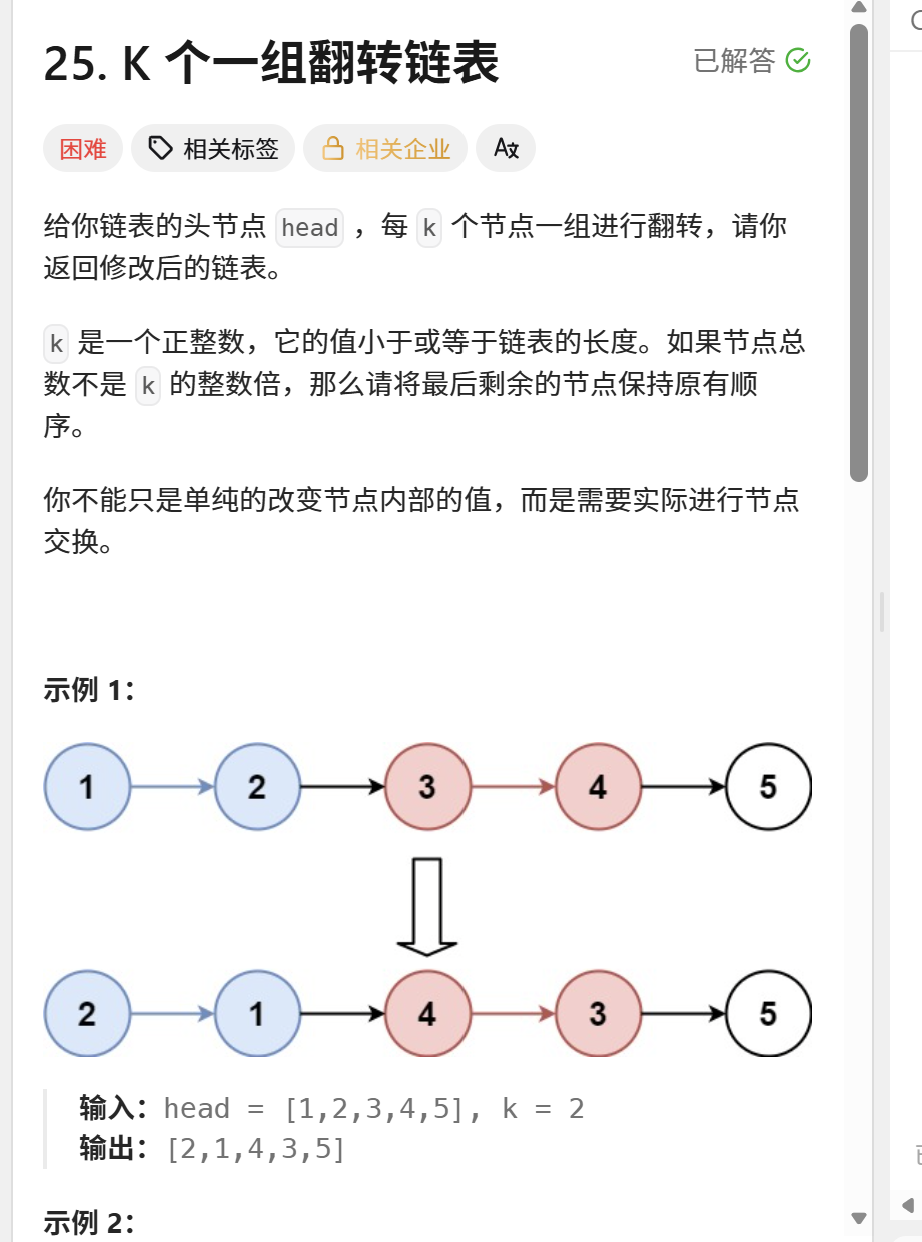
25.K个一组翻转链表
解:
1 2 3 4 5 6 7 8 9 10 11 12 13 14 15 16 17 18 19 20 21 22 23 24 25 26 27 28 29 30 31 32 33 34 35 36 37 38 39 40 41 class Solution {public :ListNode* reverseKGroup (ListNode* head, int k) {ListNode dummy (0 ) ;while (true ) {for (int i = 0 ; i < k && node; i++) {if (!node) break ;for (int i = 1 ; i < k; i++) {return dummy.next;
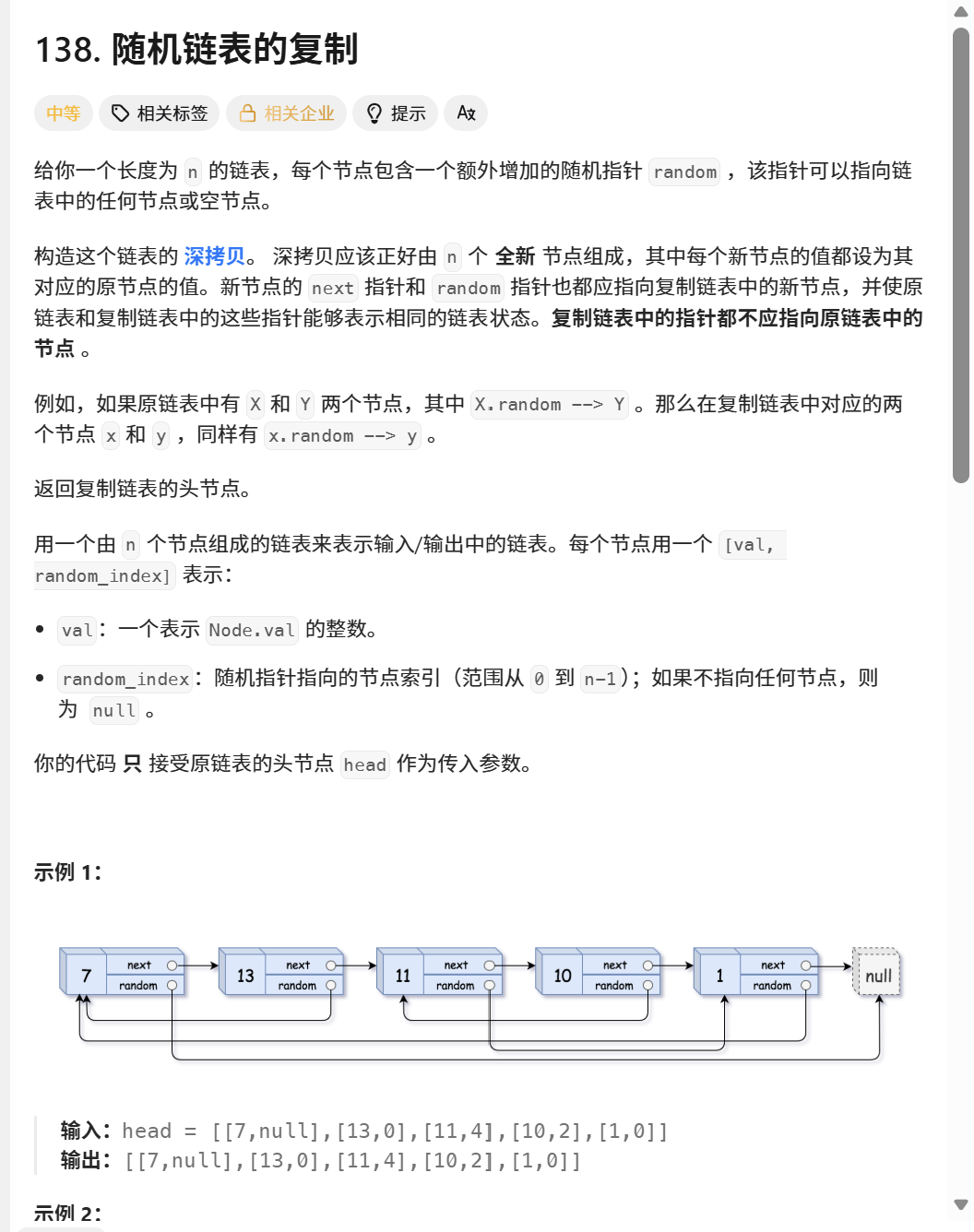
138.随机链表的复制
解法1:
哈希表
1 2 3 4 5 6 7 8 9 10 11 12 13 14 15 16 17 18 19 20 21 22 23 24 25 26 27 28 29 30 31 32 33 34 35 36 37 class Solution {public :Node* copyRandomList (Node* head) {if (!head) return nullptr ;while (cur) {new Node (cur->val);while (cur) {return mp[head];
解法2:
1 2 3 4 5 6 7 8 9 10 11 12 13 14 15 16 17 18 19 20 21 22 23 24 25 26 27 28 29 30 31 32 33 34 35 36 37 38 39 40 41 42 43 44 45 46 47 48 49 50 51 52 53 54 55 class Solution {public :Node* copyRandomList (Node* head) {if (!head) return nullptr ;while (cur) {new Node (cur->val);while (cur) {if (cur->random) {while (cur) {if (copy->next) {return newHead;
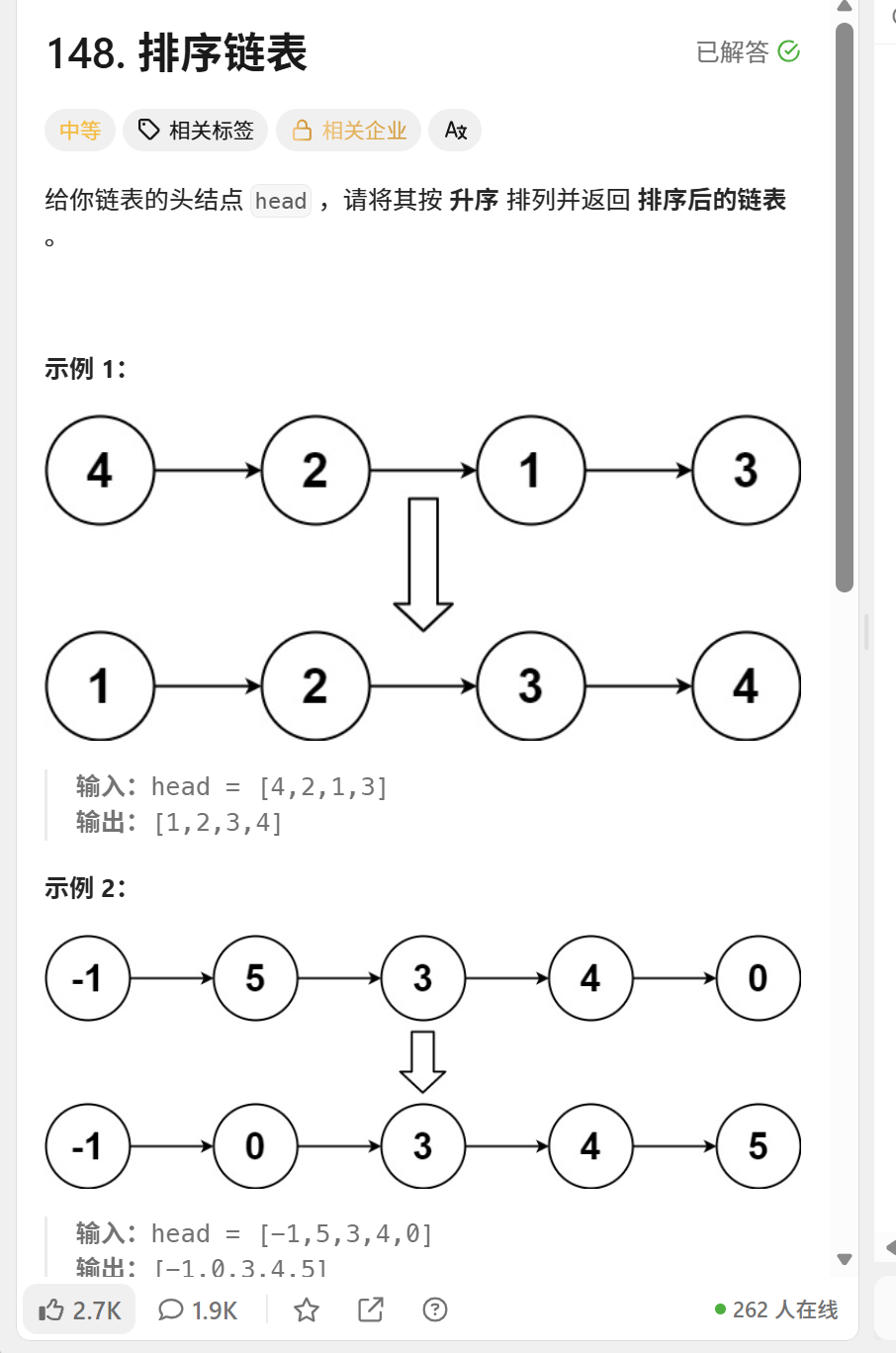
148.排序链表
解:
归并排序
1 2 3 4 5 6 7 8 9 10 11 12 13 14 15 16 17 18 19 20 21 22 23 24 25 26 27 28 29 30 31 32 33 34 35 36 37 38 39 40 41 42 43 44 45 46 47 class Solution {public :ListNode* merge (ListNode* l1, ListNode* l2) {ListNode dummy (0 ) ;while (l1 && l2) {if (l1->val < l2->val) {else {return dummy.next; ListNode* sortList (ListNode* head) {if (!head || !head->next) return head;while (fast && fast->next) {nullptr ;sortList (head);sortList (mid);return merge (left, right);
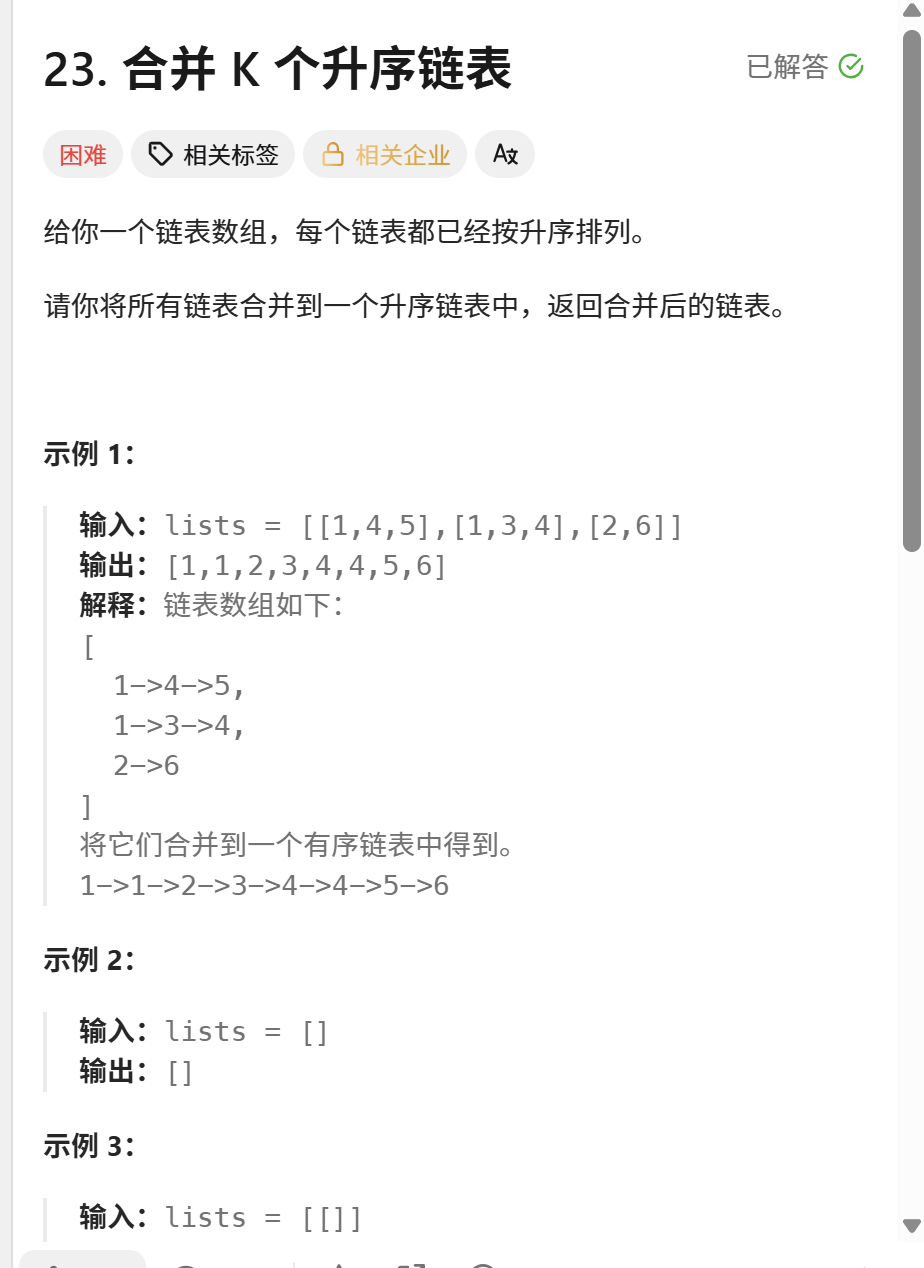
23.合并K个升序链表
解:
小顶堆
1 2 3 4 5 6 7 8 9 10 11 12 13 14 15 16 17 18 19 20 21 22 23 24 25 26 27 28 29 30 31 32 33 34 35 36 37 38 39 40 41 class Solution {public :struct cmp {bool operator () (ListNode* a, ListNode* b) return a->val > b->val; ListNode* mergeKLists (vector<ListNode*>& lists) {for (auto node : lists) {if (node) pq.push (node);ListNode dummy (0 ) ;while (!pq.empty ()) {top ();pop ();if (node->next) {push (node->next);return dummy.next;
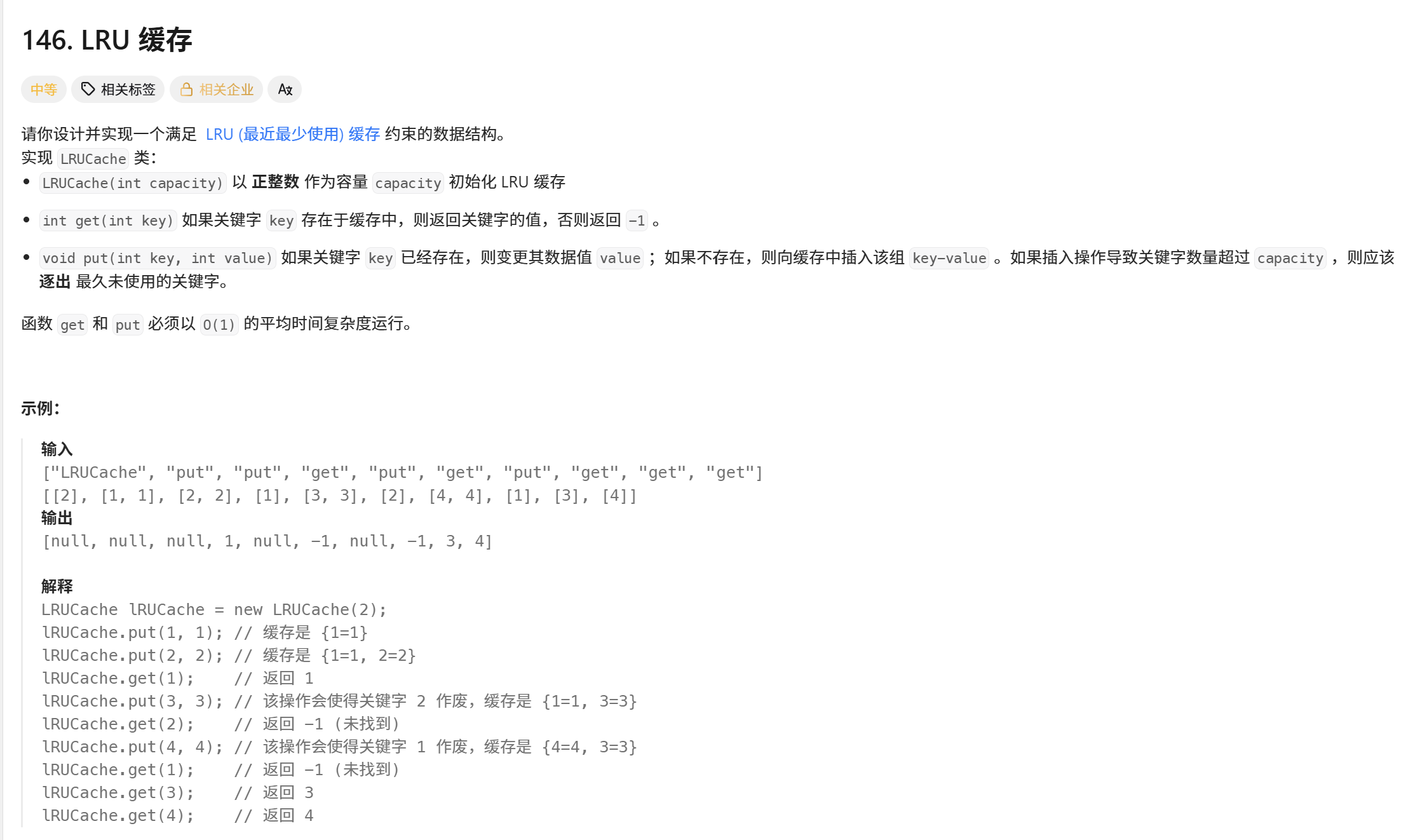
146.LRU缓存
解:
least recently used cache
哈希表 + 双向链表
1
2
3
4
5
6
7
8
9
10
11
12
13
14
15
16
17
18
19
20
21
22
23
24
25
26
27
28
29
30
31
32
33
34
35
36
37
38
39
40
41
42
43
44
45
46
47
48
49
50
51
52
53
54
55
56
57
58
59
60
61
62
63
64
65
66
67
68
69
70
71
72
73
74
75
76
77
78
79
80
81
82
83
84
85
86
class LRUCache {private :struct Node {int key;int val;Node (int k,int v):key (k),val (v),prev (nullptr ),next (nullptr ){}int ,Node*> cache;int capacity;public :LRUCache (int capacity) {this ->capacity = capacity;new Node (0 ,0 );new Node (0 ,0 );void remove (Node* node) void insert (Node* node) int get (int key) if (cache.count (key) == 0 ) {return -1 ;remove (node);insert (node);return node->val;void put (int key, int value) if (cache.count (key)) {remove (node);insert (node);else {if (cache.size () == capacity) {remove (node);erase (node->key);new Node (key,value);insert (node);